The Beginner's Mind
What It Is
In the context of building complex systems and navigating new technologies, the Beginner’s Mind is not about being a novice; it is about the strategic choice to approach a problem without the baggage of your own expertise. It is a mental reset button that allows you to see a challenge for what it actually is, rather than what your previous experience dictates it should be.
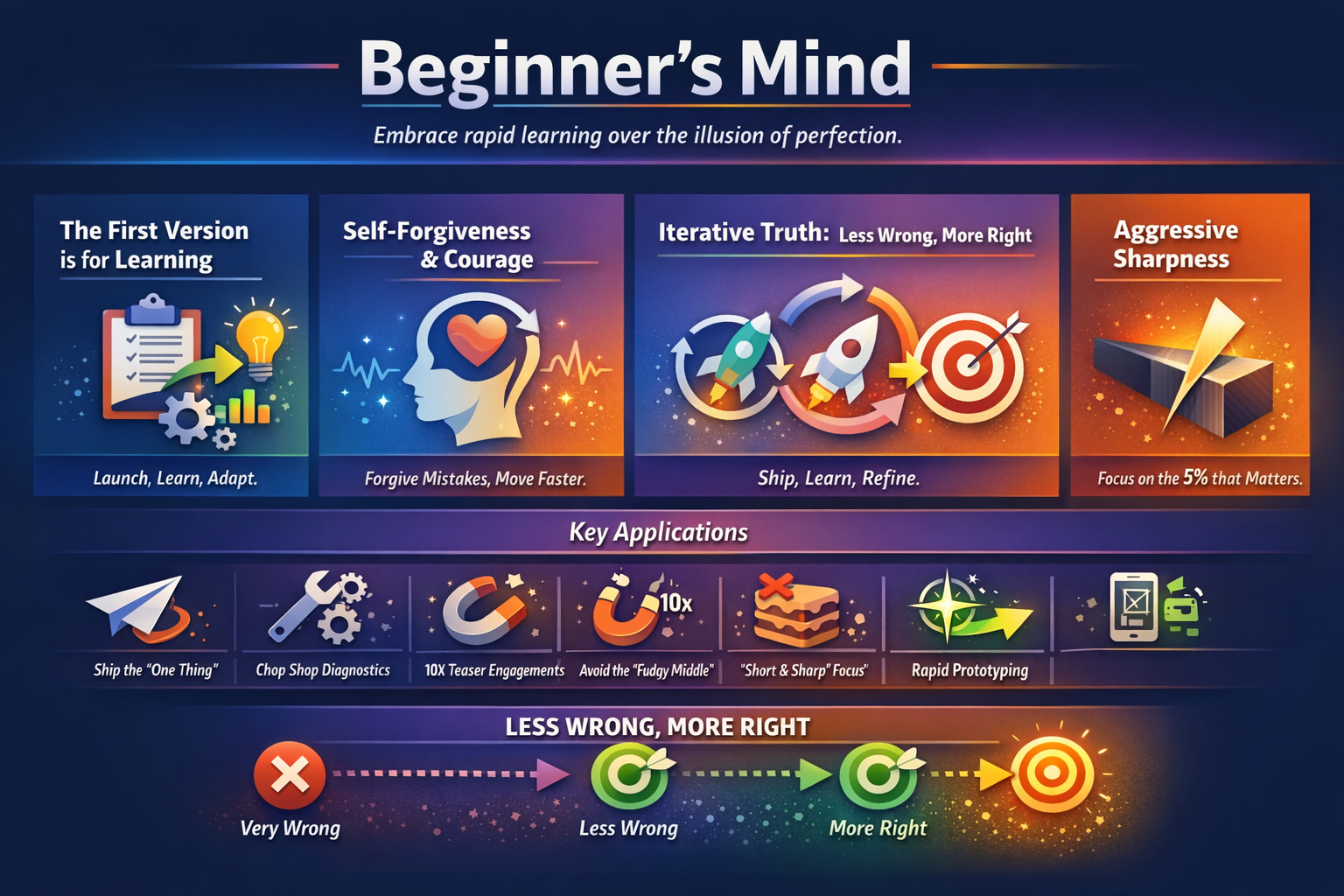
At its core, this mental model is a commitment to continuous learning and a rejection of the "expert’s trap"—the belief that because you have solved a problem in one domain, you already have the definitive answer for a new one. It is a recognition that you are in a constant state of evolution. You are smarter today than you were yesterday, and you will be smarter tomorrow than you are today. If you accept this as a baseline fact, you stop trying to build the "perfect" thing today and start building the "right" thing for your current level of understanding.
The Beginner’s Mind is characterized by a high degree of receptivity and an embrace of imperfection. It acknowledges that in fast-moving fields like no-code and software development, knowledge is transient. What worked in a traditional stack might be an anti-pattern in a new one. By adopting the Beginner’s Mind, you give yourself permission to be "less wrong" over time rather than demanding you be "right" from the jump.
Why It Matters
The primary problem the Beginner’s Mind solves is the paralysis of perfectionism and the friction of outdated expertise. Without this mindset, developers and founders often get stuck in a "planning loop," trying to architect the perfect solution before they even understand the constraints of the tool they are using. They treat their first version as if it’s the final monument of their career, which creates immense pressure and leads to "shipping anxiety."
When you lack a Beginner’s Mind, your existing domain expertise becomes a liability. You try to force a new technology to behave like an old one. This leads to "Expert Friction," where you spend more time fighting the tool's intended path than you do building. You become blind to innovative solutions because they don't look like the solutions you've used in the past.
With the Beginner’s Mind, however, speed and adaptability become your primary competitive advantages. You recognize that the first version of any build is primarily for learning, not for perfection. This shifts the goal from "don't make mistakes" to "get to the next iteration faster." It unlocks the courage to ship imperfect work, which is the only way to gain the "ship knowledge" required to eventually reach greatness. It transforms the building process from a high-stakes performance into a low-stakes experiment.
How It Works
The Beginner’s Mind operates through a few specific principles and internal frameworks that change how you interact with a project.
1. The Principle of Self-Forgiveness
Courage is a prerequisite for building anything new, and self-forgiveness is the fuel for that courage. You must accept that you will make mistakes, write messy code, or choose the wrong database structure initially. By forgiving yourself for not being perfect today, you remove the emotional weight that causes procrastination. You accept imperfection in the short term as the necessary price for achieving greatness in the long term.
2. The First Version Rule
The Beginner’s Mind dictates that "you will build this again." Instead of trying to build the permanent solution on day one, you approach the first version as a learning exercise. The goal of version one is to uncover the "unknown unknowns." Because you know the software is "mortal" and will eventually be rebuilt or refined, you can move faster and focus on the core logic rather than the edge cases.
3. The "Less Wrong" Heuristic
In a Beginner’s Mind, the concept of "The Right Way" is replaced by the "Less Wrong" approach. You accept that there is rarely a single perfect answer to a complex problem. Instead, you aim to be "less wrong" than you were in the previous iteration. This creates a cycle of continuous improvement where the pressure to be an infallible expert is replaced by the curiosity of a student.
4. Balancing Confidence with Openness
This model requires a specific internal balance: You must have high confidence in your ability to learn, paired with a humble acceptance that you don't have all the answers yet. You trust your capacity to figure it out while remaining open to the idea that your current assumptions might be totally incorrect.
When to Apply
This mental model is most valuable during technological transitions. When an experienced developer moves from traditional coding to no-code, or from one framework to another, they must intentionally adopt the Beginner’s Mind. This is the only way to avoid the "expert’s trap" of trying to rebuild a SQL database logic inside a tool meant for a different architecture.
It is also essential when tackling unfamiliar domains. If you are a technical founder building a product for the healthcare or legal space, you must approach the domain problems with zero preconceptions. Your expertise in software doesn't give you automatic insight into the nuances of a different industry.
Finally, apply this when you hit "The Wall." If you’ve been working on a problem for days and haven't found a solution, your "expert mind" is likely stuck in a specific bias. Resetting to a Beginner’s Mind—asking the "dumb" questions, questioning the base assumptions—is often the only way to see the innovative path forward.
Common Traps
A common misconception is that the Beginner’s Mind means ignoring your experience or acting like you know nothing. This is not the case. Your domain expertise is valuable, but it must be paired with an openness to learning. The trap is letting your expertise become a filter that blocks out new information. You should use your experience to ask better questions, not to provide premature answers.
Another trap is using the "Beginner’s Mind" as an excuse for sloppiness. Embracing imperfection is about velocity and learning, not about being lazy. There is a difference between shipping an imperfect solution because you are testing a hypothesis and shipping a broken one because you didn't care to check the work. The Beginner’s Mind is still a disciplined mind; it is just disciplined toward learning rather than toward ego-protection.
Finally, people often mistake "temporary solutions" for "bad solutions." In the Beginner’s Mind, a transient solution that allows you to move forward and learn is a "good" solution for that moment. Don't fall into the trap of thinking everything you build must be built for 100-year durability. Software is finite.
How It Connections
While not explicitly listed as "related concepts" in the source materials, the Beginner's Mind is the foundational layer for several other State Change principles.
It is the precursor to Ship Knowledge. You cannot gain ship knowledge—the deep, practical understanding that comes from actually putting a product in front of users—if you are too afraid of being "wrong" to ship. The Beginner’s Mind provides the psychological safety to ship early and often.
It also connects deeply to the concept of Continuous Improvement. If you believe you are an expert who should already have the answer, improvement is a threat to your identity (it means you were "wrong" before). If you have a Beginner’s Mind, improvement is simply the natural result of being "smarter tomorrow than you are today." It aligns your identity with the process of learning rather than the status of knowing.
Evidence from Sources
On Imperfection and Learning
"Embrace imperfection and forgiveness. Recognize that you will be smarter tomorrow than you are today. It's about focusing on continuous learning and improvement rather than aiming for perfection in the first iteration." — Ray's Mental Model: Core Principles for Building with No-Code
On the "Less Wrong" Mindset
"Understand there is no 'right,' only 'less wrong'" — Mental Model Map from Miro
On the Value of Expertise vs. Openness
"Domain expertise is valuable, but must be paired with openness to learning" — Founders Institute Talk (8/23)
On the Transience of Software
"Recognize that all software is finite/mortal - you will build it again" — SC Mental Model Talk 1 6/2023
On Self-Forgiveness and Courage
"Self-forgiveness is the key to courage — Accept imperfection today to achieve greatness tomorrow" — NCO Talk (6/23)
On the Purpose of the First Version
"You will build this again — The first version is for learning, not perfection" — NCO Talk (6/23)
In Practice
Scenario 1: The Expert Transition
A developer with 15 years of experience in Ruby on Rails decides to build an MVP using a no-code tool like Bubble or Xano. Initially, they are frustrated because the tool doesn't allow them to manipulate the database exactly how they would in SQL. An "Expert Mind" would dismiss the tool as limited and quit. A "Beginner’s Mind" stops and asks: "How does this tool want to solve this problem?" They forgive themselves for not being able to build at their usual speed and focus on learning the new "mental model" of the tool. They build a messy version 1, realize where they went wrong, and rebuild version 2 in half the time with twice the power.
Scenario 2: The "Good Enough" Release
A founder is terrified to launch their app because the onboarding flow feels a bit "clunky." Using the Beginner’s Mind, they realize that their primary goal isn't a perfect UI—it’s learning if people actually want the service. They tell themselves, "I will know more about what users want tomorrow than I do today." They ship the clunky version, get immediate feedback that the onboarding is fine but the dashboard is confusing, and they save weeks of work that would have been spent "perfecting" the wrong thing.
Scenario 3: Dealing with Technical Debt
A team realizes that the architecture they chose three months ago is now slowing them down. Instead of viewing this as a failure or a "mistake" that needs a culprit, they apply the Beginner’s Mind. They recognize that the software is mortal and that they built version 1 to get the knowledge they have now. They don't get sentimental about the code. They embrace the "transient solution," forgive their past selves for not knowing the future, and start the "less wrong" rebuild with high velocity.
Have questions about The Beginner's Mind?
Ask the AI Mentor — free, 10 questions/month
See This Model in Action
Real sessions where Ray teaches The Beginner's Mind live.

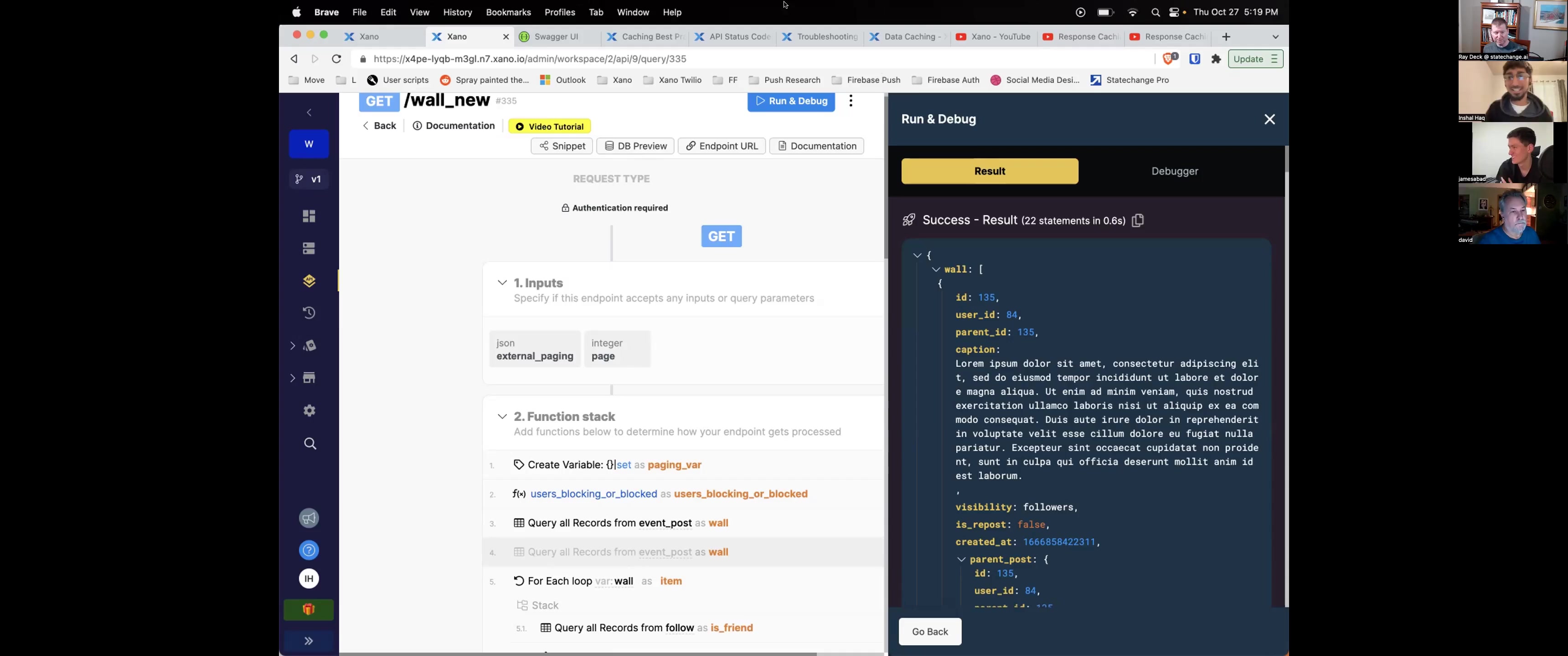
Leveraging AI-Powered Code Generation for Faster App Development
Integrating Swiper.js into Webflow: Challenges and Solutions
Troubleshooting Windows PowerShell, YAML, and Build.sh Compatibility Issues
Join State Change to watch full sessions and access 1,000+ more.
Go Deeper
Mental models are just the beginning. Here’s what members get:
Live Office Hours
Ray teaches this model in real time — with your real problems, real code, and real breakthroughs.
Session Vault
1,000+ recorded sessions searchable by topic. Find exactly the moment this model clicks.
AI Skills & MCP Tools
Your AI assistant learns these models too — Skills and MCP servers that bring Ray's thinking to your workflow.
Builder Community
Ask questions, share breakthroughs, get unstuck with 500+ builders who think in models, not just code.