Our Four Pillars
A comprehensive framework for mastering every dimension of working with AI — delivered through Office Hours, Masterminds, and a growing library of mental models
Build For AI
Create products designed for the AI era
Learn to architect solutions that leverage AI capabilities from the ground up. In Office Hours, we work through your specific product challenges—model selection, prompt architecture, agent design. In Masterminds, you'll collaborate with peers building AI-native products to pressure-test ideas and accelerate shipping.
Topics We Cover
- AI product architecture
- Prompt engineering at scale
- AI-first user experiences
- Model selection and evaluation
- Building AI agents and workflows
Office Hours
1-on-1 sessions tackling your AI product architecture and agent design challenges
Masterminds
Peer cohort building AI-native products—share progress, get feedback, stay accountable
Key Mental Models
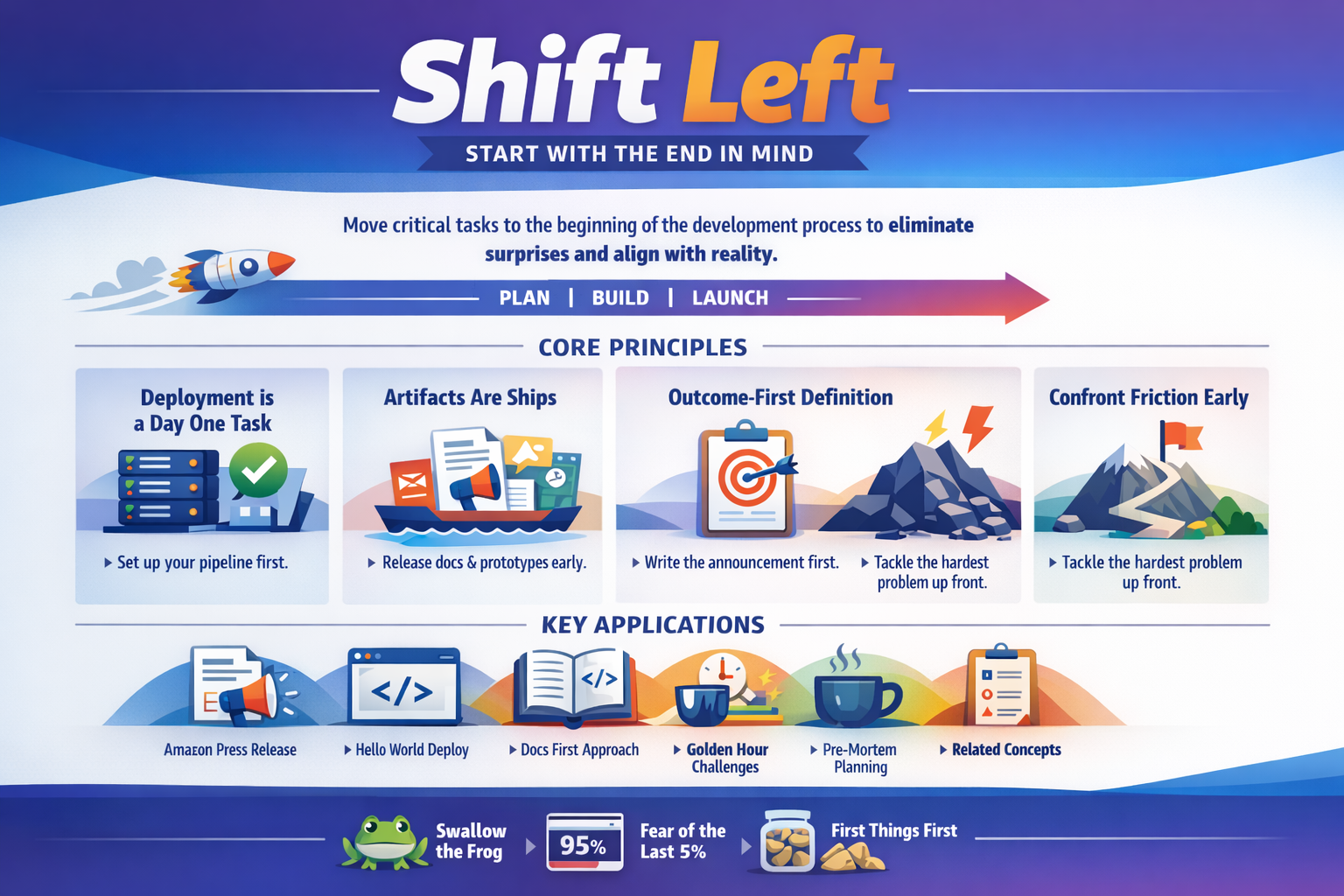
Shift Left
In the world of software development and building systems, "Shift Left" is the intentional practice of moving critical tasks, testing, and considerations to an earlier stage in the lifecycle. If you visualize a project timeline from left (start) to right (finish), most people save the "hard stuff"—deployment, testing, documentation, and user feedback—for the far right. They treat these as the final hurdles to clear before a project is "done."
Explore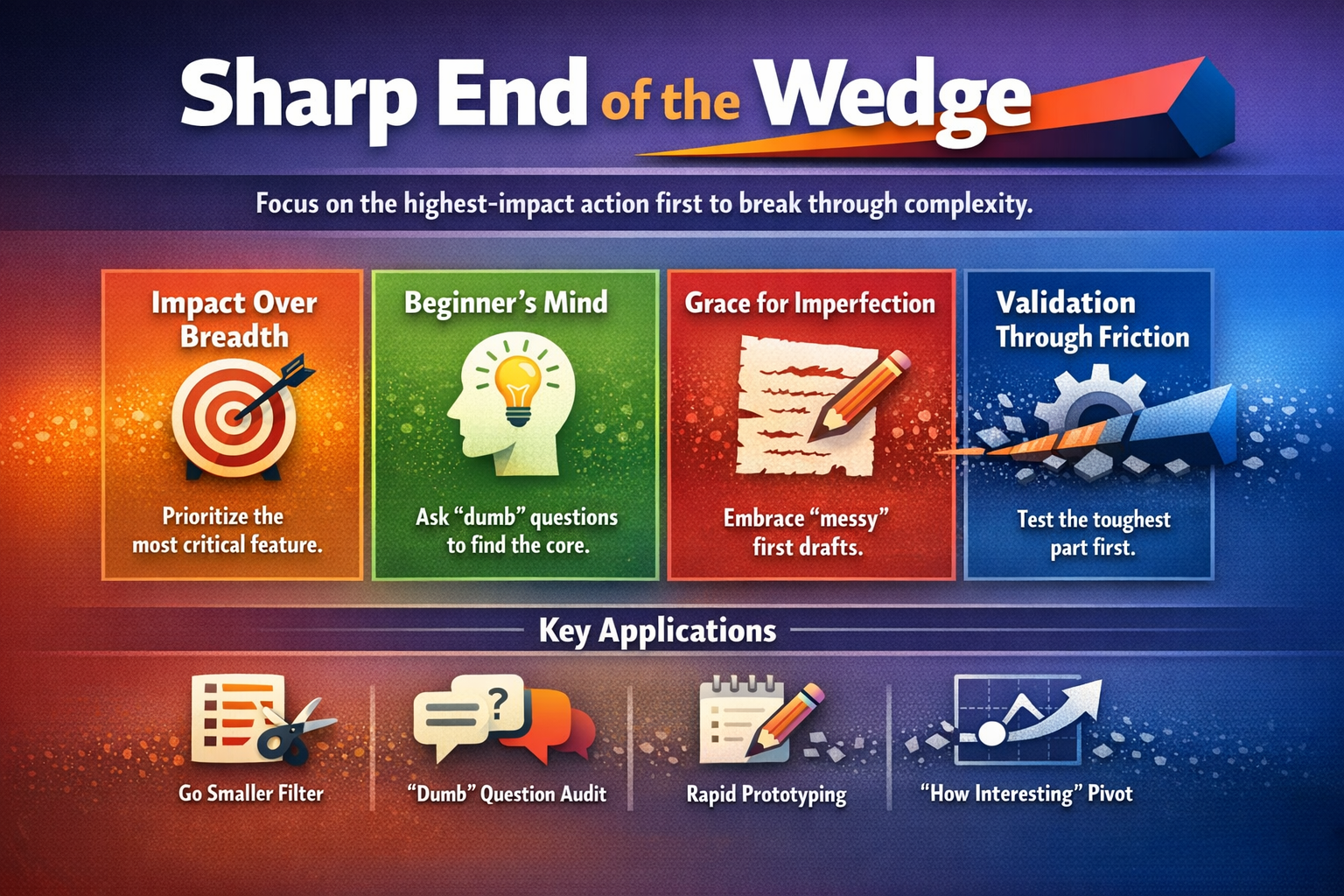
The Sharp End of the Wedge
The Sharp End of the Wedge is a mental model for sequencing work, specifically tailored for founders and builders who need to create maximum impact with limited resources. In the simplest terms, it dictates that you must start with the smallest, highest-impact component of your solution before you build anything else.
Explore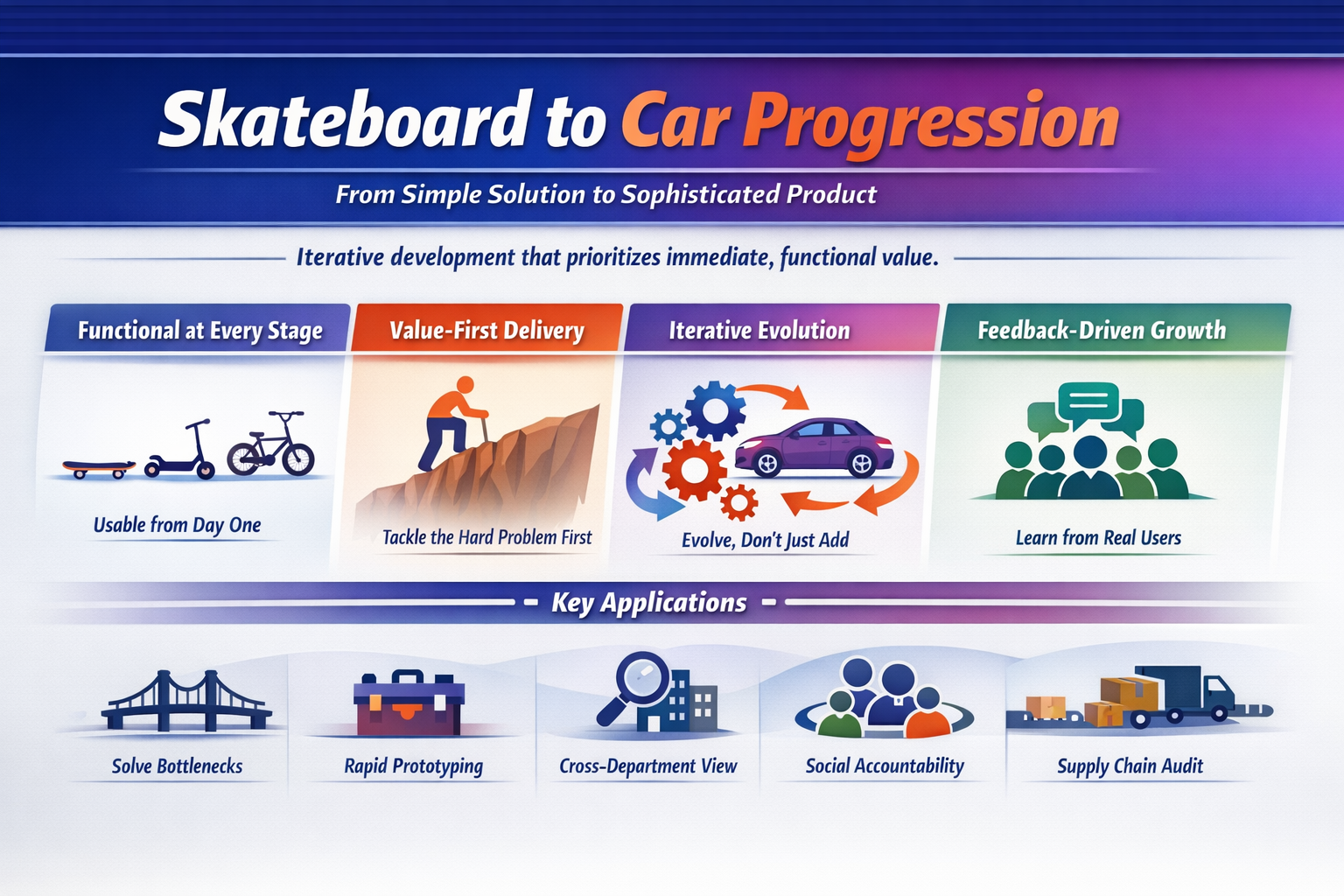
Skateboard to Car Progression
The **Skateboard to Car Progression** is a mental model for product development and problem-solving that prioritizes immediate utility over eventual perfection. In the "State Change" philosophy, we aren’t interested in building components in isolation; we are interested in moving the needle for the user as quickly as possible.
Explore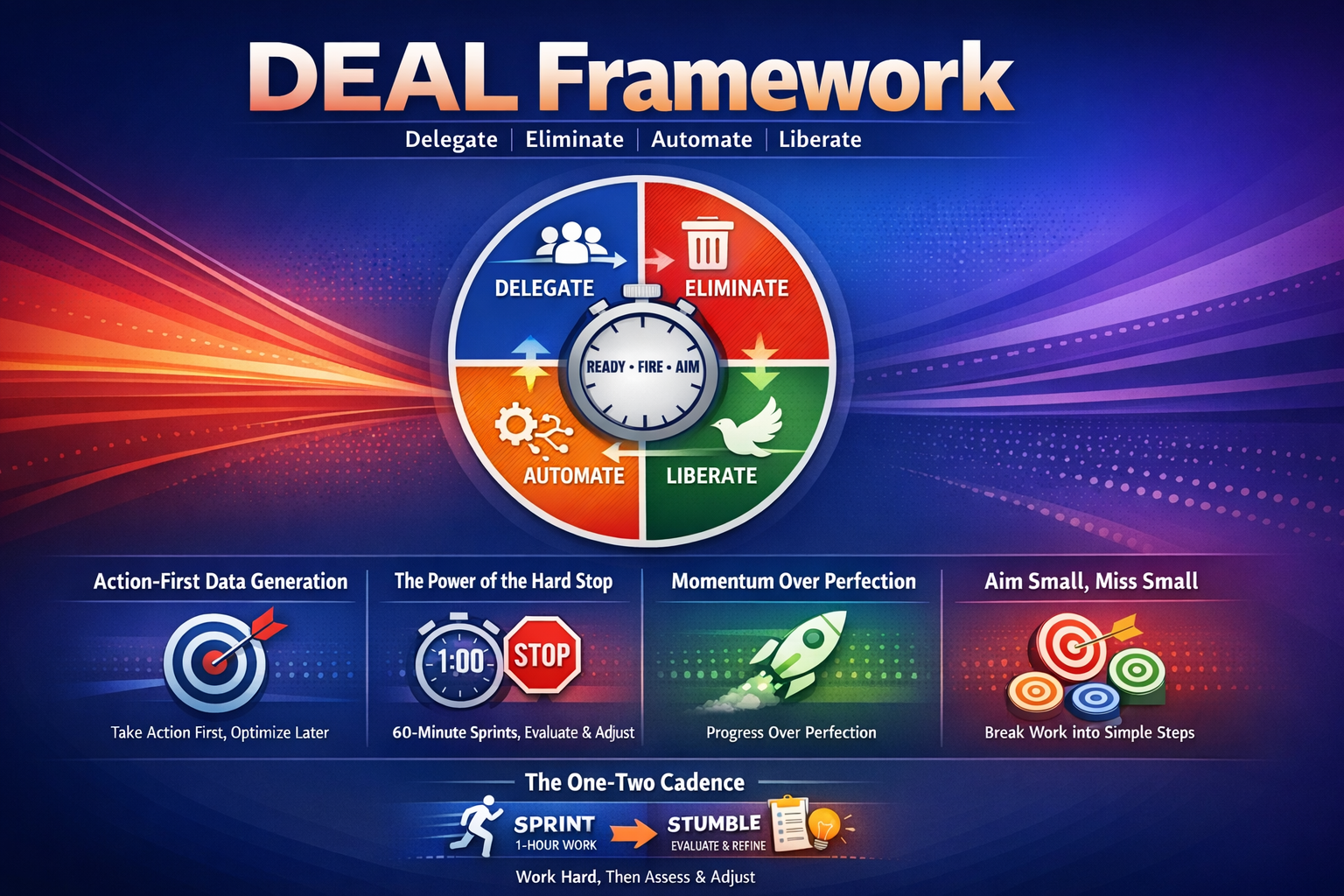
DEAL Framework
ExploreBuild With AI
Augment your development with AI tools
Master the tools and techniques to integrate AI into your development workflow. Office Hours help you optimize your AI-augmented dev setup—copilots, code generation, testing. Masterminds connect you with other developers leveling up their AI-powered workflows to share wins and workarounds.
Topics We Cover
- AI coding assistants
- Automated testing with AI
- AI-powered debugging
- Code generation best practices
- Building with LLM APIs
Office Hours
Hands-on help optimizing your AI coding workflow and tool stack
Masterminds
Developer cohort sharing AI-augmented development techniques and breakthroughs
Key Mental Models
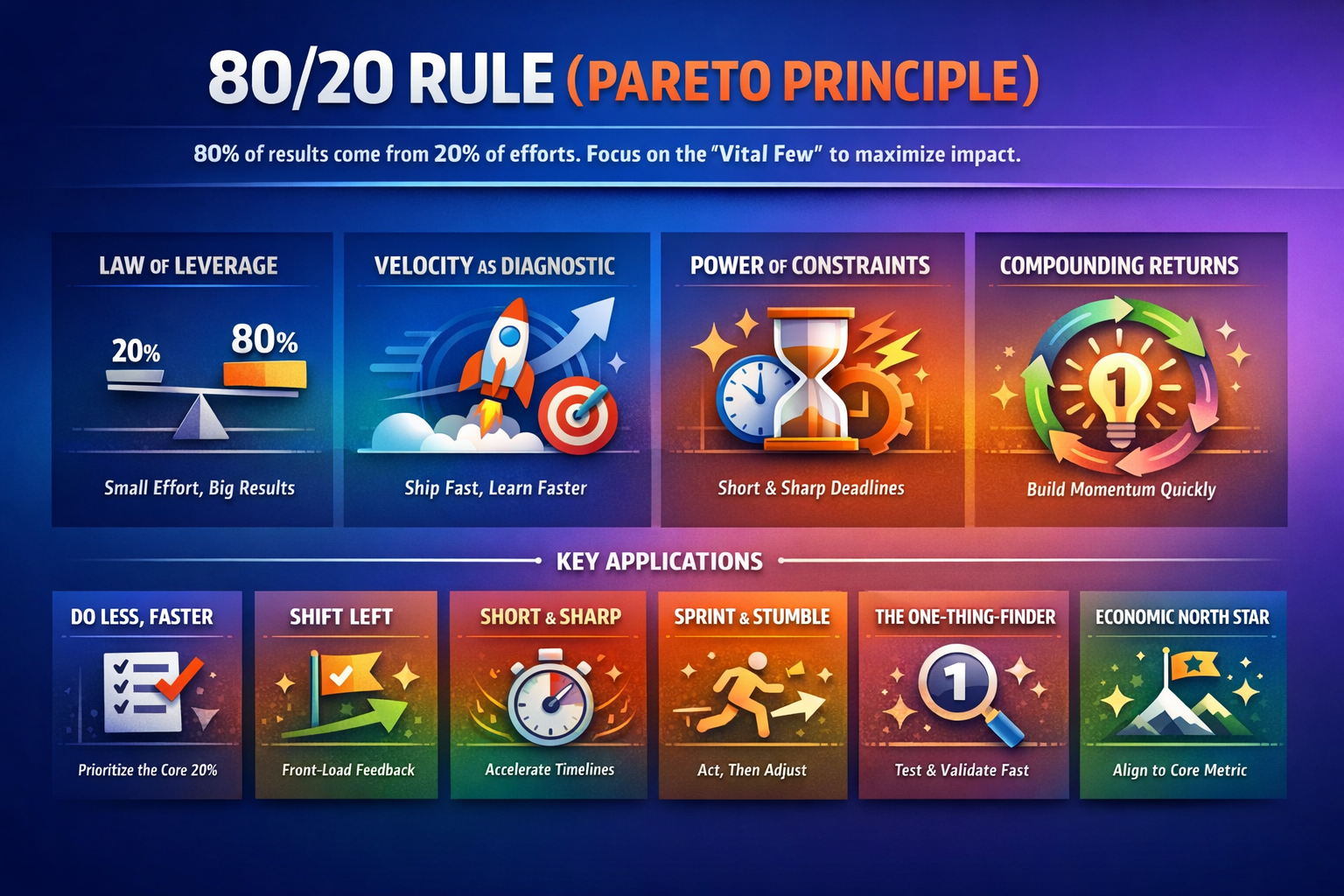
80/20 Rule (Pareto Principle)
The 80/20 Rule, or Pareto Principle, is the observation that in almost any system, the relationship between inputs and outputs is non-linear. Specifically, a minority of causes (roughly 20%) is responsible for the majority of effects (roughly 80%). In a high-performance environment, this is not just a statistical curiosity; it is a foundational law of efficiency. It suggests that most of what we do is noise, and a small sliver of our effort is responsible for nearly all of our progress.
Explore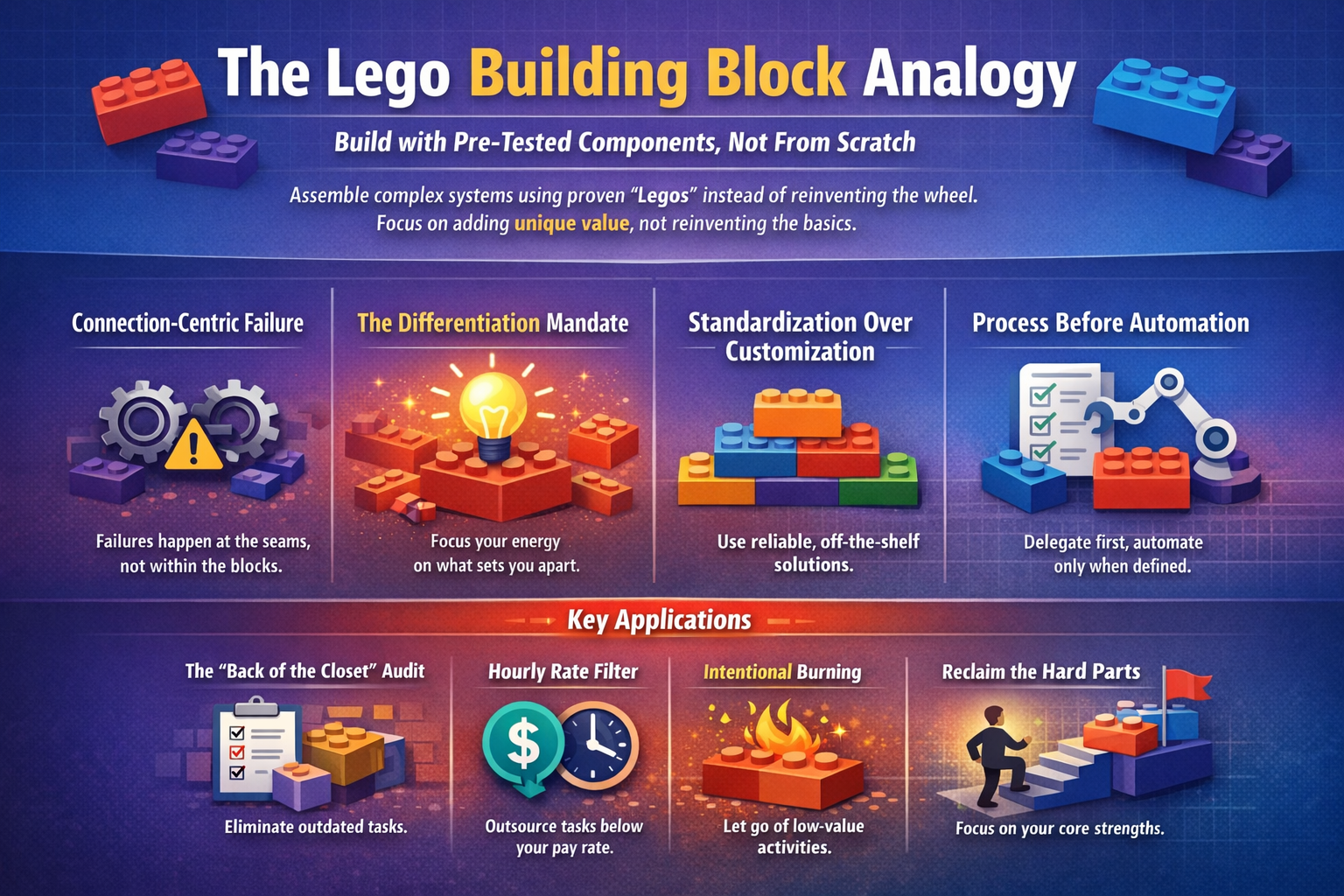
The Lego Building Block Analogy
The Lego Building Block Analogy is a mental model for system design and problem-solving that prioritizes assembly over invention. In a world where software and business processes are increasingly commoditized, this principle argues that your primary job isn't to manufacture every individual part of your solution. Instead, your job is to identify high-quality, pre-built, and well-tested components—the "Legos"—and focus your intellectual capital on how they fit together to solve a specific problem.
Explore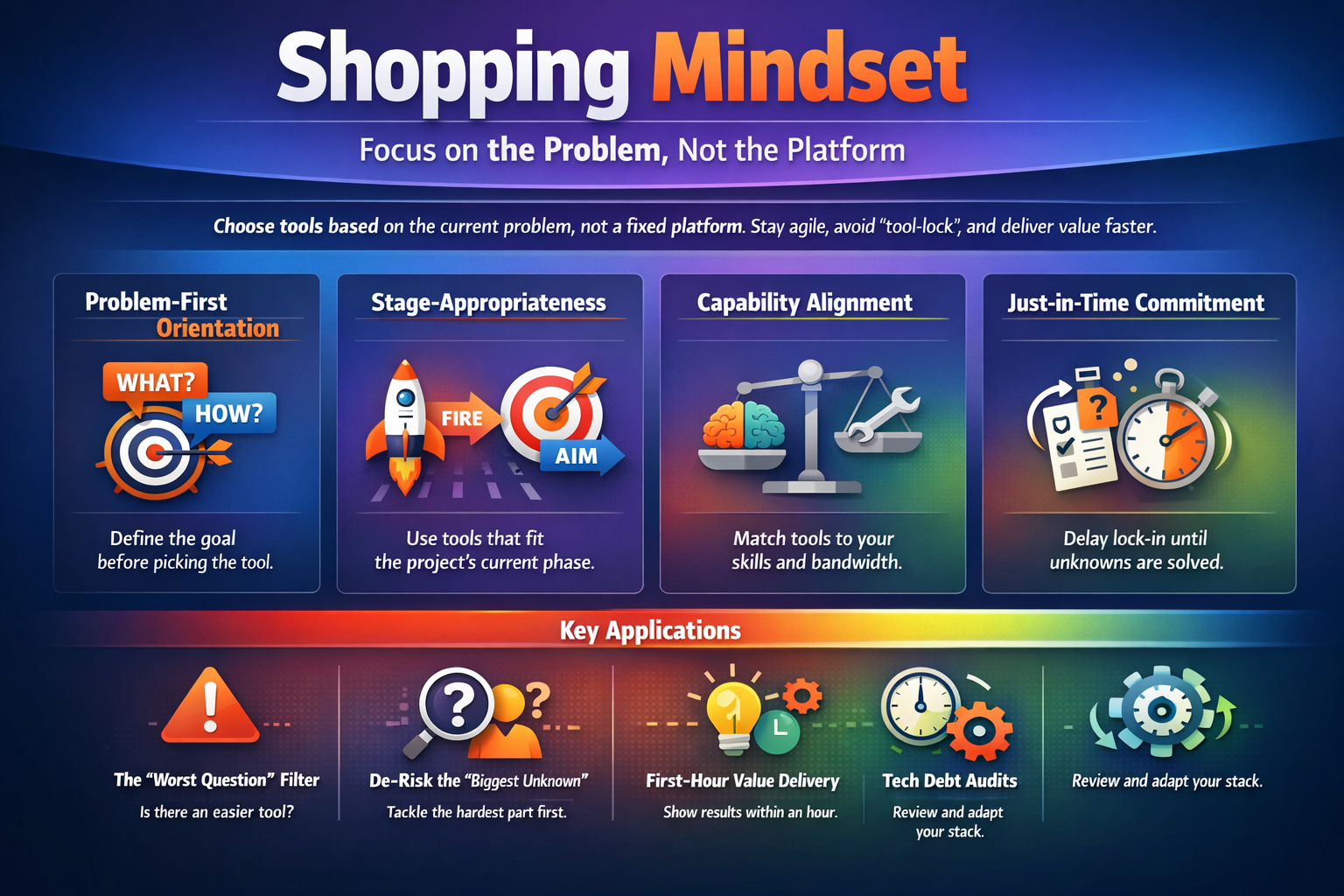
Shopping Mindset
The Shopping Mindset is a fundamental shift in how you approach the construction of a technical product. It is the transition from being a "Tool Disciple"—someone who identifies with a specific stack or language—to being a "Sophisticated Consumer." In Ray’s view, most founders and developers approach a problem backward. They start with a tool they know (or a tool that is currently trendy) and then try to force their problem to fit the constraints of that tool. The Shopping Mindset flips this: you start with the problem, define the requirements of your current stage, and then "shop" for the tool that provides the shortest path to the solution.
Explore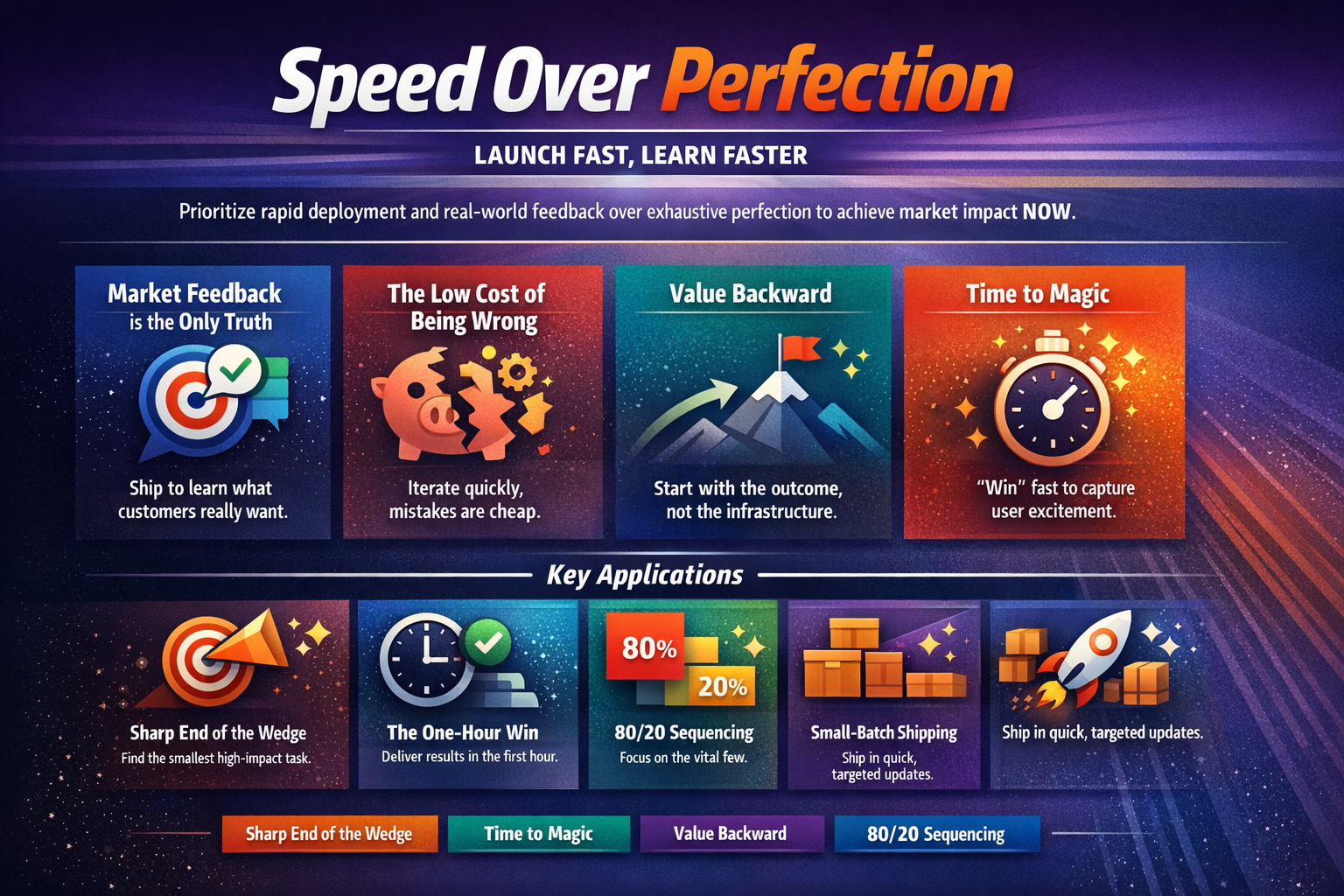
Speed Over Perfection
Speed Over Perfection is a strategic prioritization of time-to-market and iterative learning over the exhaustive pursuit of a "complete" or "flawless" initial product. In the context of modern software development, this mental model dictates that the most valuable asset a developer or founder can possess is not a polished codebase, but high-fidelity data from real-world usage.
ExploreWork With AI
Transform how you and your team operate
Develop workflows that amplify human creativity with AI capabilities. Office Hours focus on your specific workflow bottlenecks—where AI can save hours, not minutes. Masterminds bring together leaders transforming their teams' daily operations with AI-human collaboration patterns.
Topics We Cover
- AI workflow design
- Team AI adoption
- AI-human collaboration patterns
- Knowledge management with AI
- AI governance and ethics
Office Hours
Solve your team's AI integration challenges and workflow bottlenecks
Masterminds
Leaders sharing AI adoption strategies and team transformation playbooks
Key Mental Models
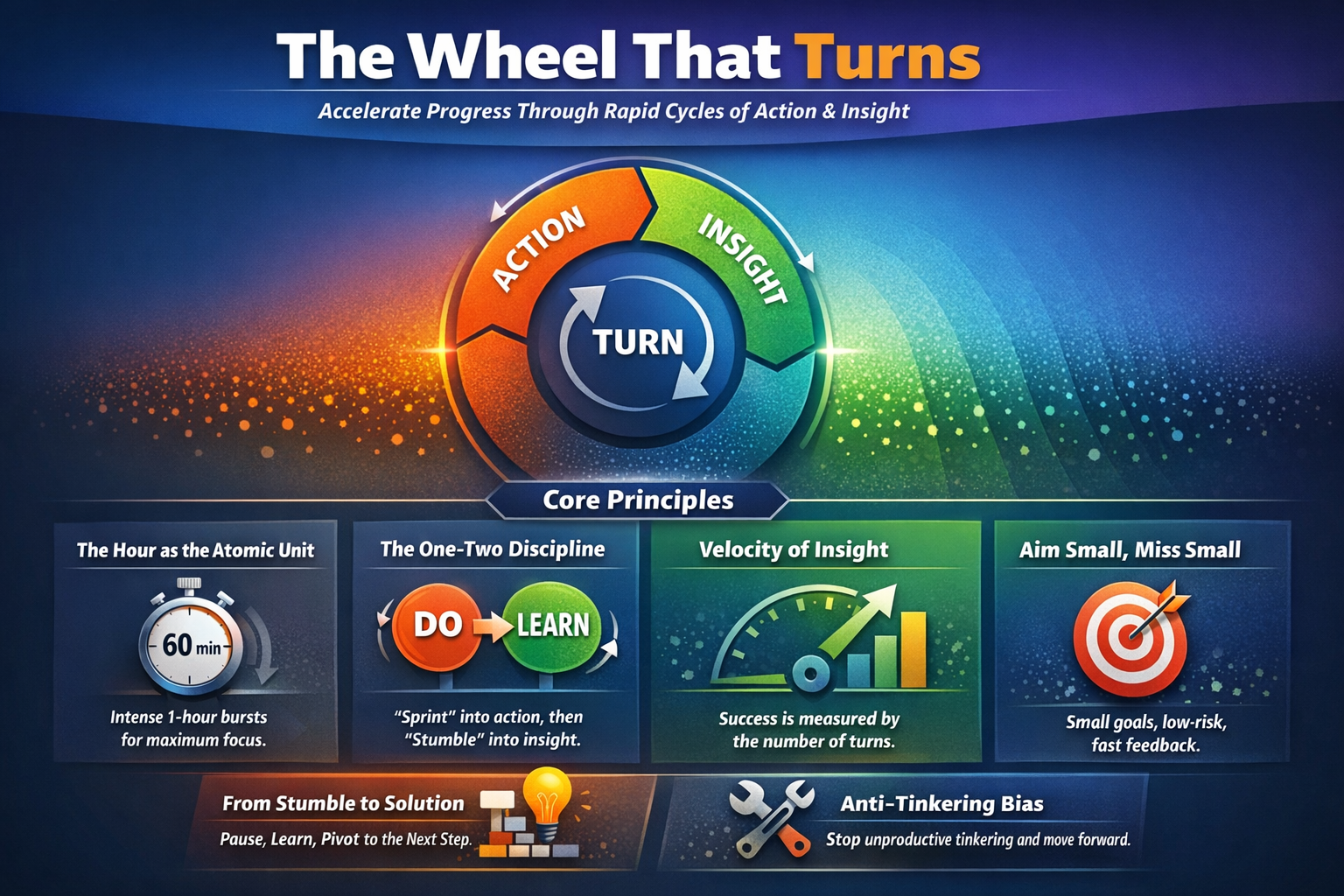
The Wheel That Turns
The Wheel That Turns is the central engine of professional evolution. It is a mental model that describes a self-reinforcing cycle where specific principles—Curiosity, Beginner’s Mind, Bias Toward Motion, and Shifting Left—feed into one another to create compounding momentum. It isn’t a linear checklist; it is a flywheel. Once you get it moving, each revolution becomes easier and faster, and the output isn't just a finished product, but a more capable version of yourself.
Explore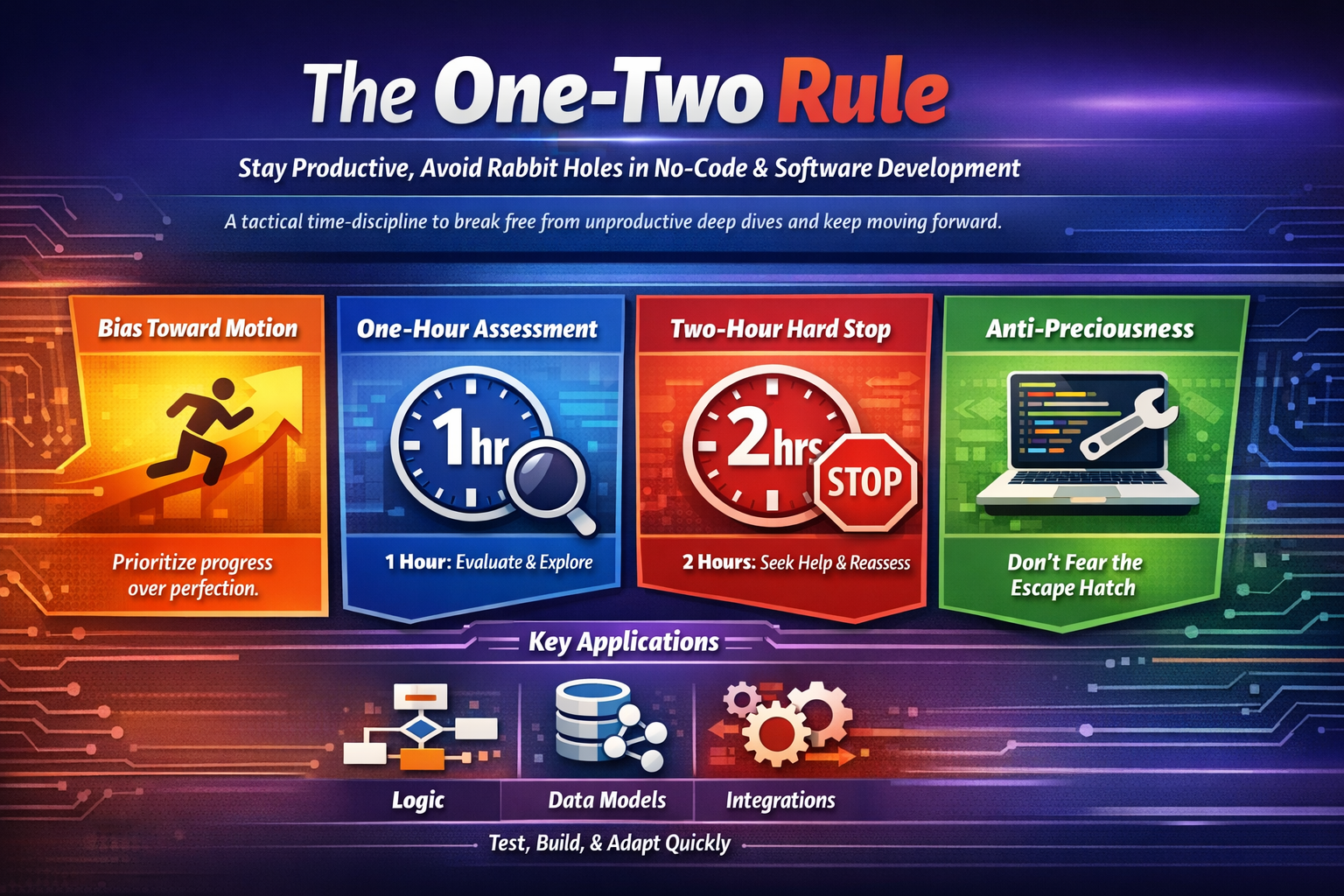
The One-Two Rule
The One-Two Rule is a rigid time discipline designed to enforce a Bias Toward Motion. In the world of building—whether you are working with no-code tools, traditional code, or complex business logic—it is incredibly easy to lose hours to a single, stubborn problem that refuses to yield. This mental model acts as an automated "circuit breaker" for your focus. It prevents you from sinking an entire day into a rabbit hole that yields zero progress.
Explore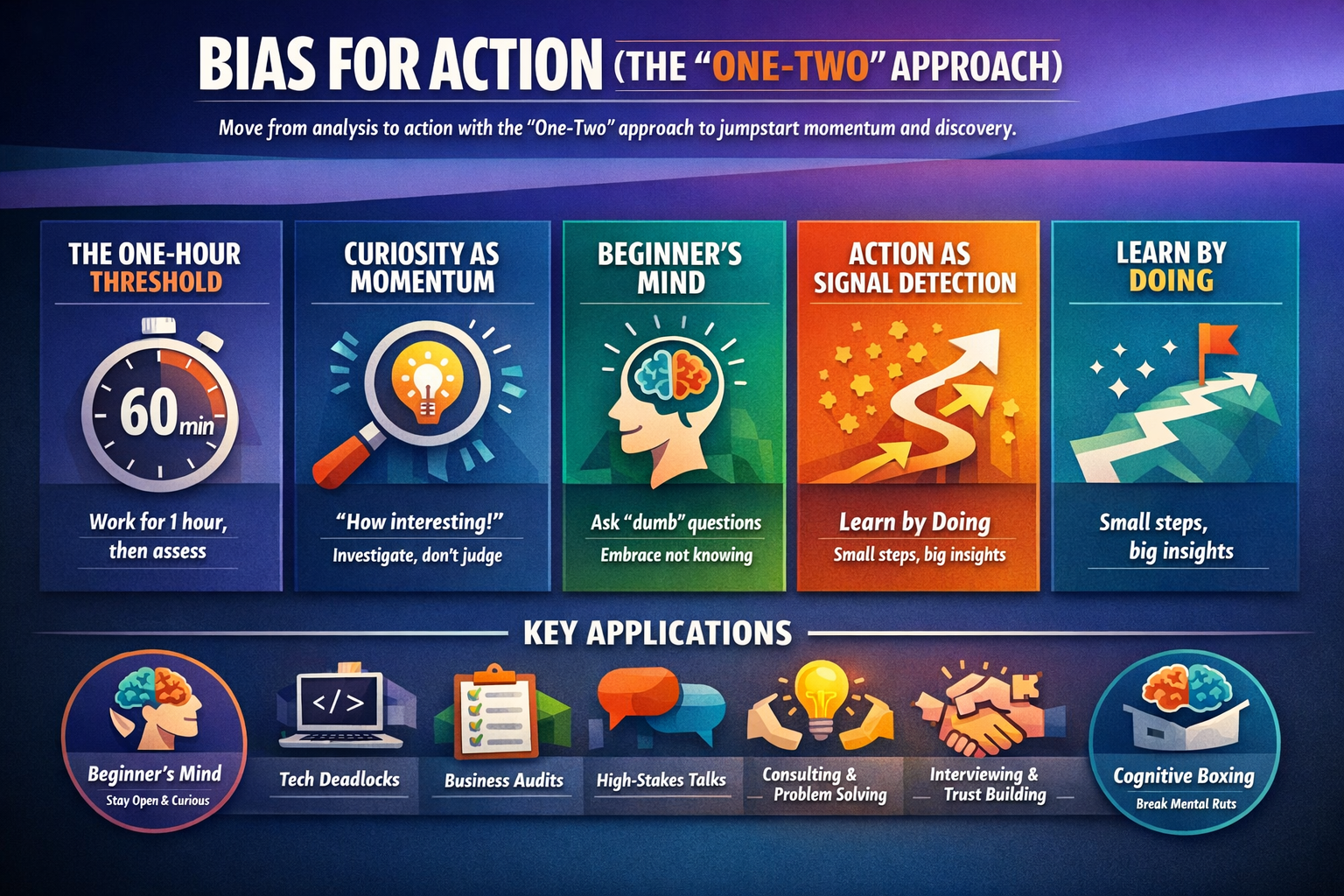
Bias for Action (The "One-Two" Approach)
The "One-Two" Approach is a mental model designed to bridge the gap between analysis paralysis and aimless effort. At its core, it is a bias for action structured around a disciplined time-box. Instead of waiting for certainty or attempting to map out a perfect end-to-end solution, you commit to a focused, one-hour burst of activity aimed at discovery rather than completion.
Explore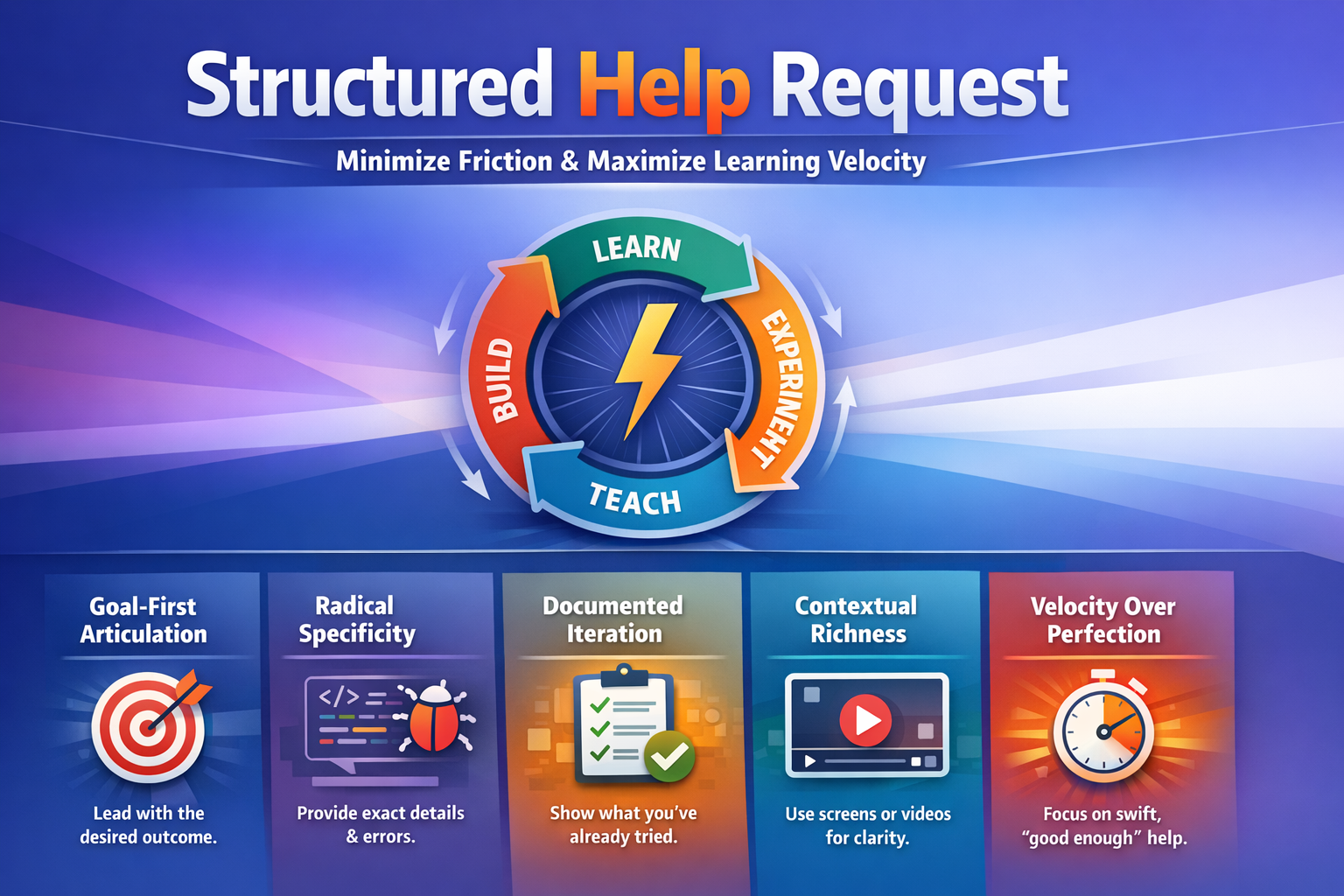
Structured Help Request
A Structured Help Request is a standardized protocol for communicating technical difficulties to a peer, mentor, or support team. It is a departure from the "reactive" mode of seeking assistance—where a developer or builder simply broadcasts their frustration—and a move toward a "proactive" communication model. At its core, it is about packaging the maximum amount of relevant context into the minimum amount of communication overhead.
ExploreMarketing for AI
Navigate AI product marketing
Position, message, and sell in a market where AI is both the product and the medium. Office Hours help you craft positioning, demo strategies, and trust-building messaging for your AI product. Masterminds connect AI product marketers navigating the unique challenges of selling AI-powered solutions.
Topics We Cover
- AI product positioning
- Trust and transparency messaging
- Demo strategies for AI products
- AI content marketing
- Competitive differentiation
Office Hours
Refine your AI product positioning, demos, and go-to-market messaging
Masterminds
AI product marketers sharing what's working in positioning, trust, and differentiation
Key Mental Models
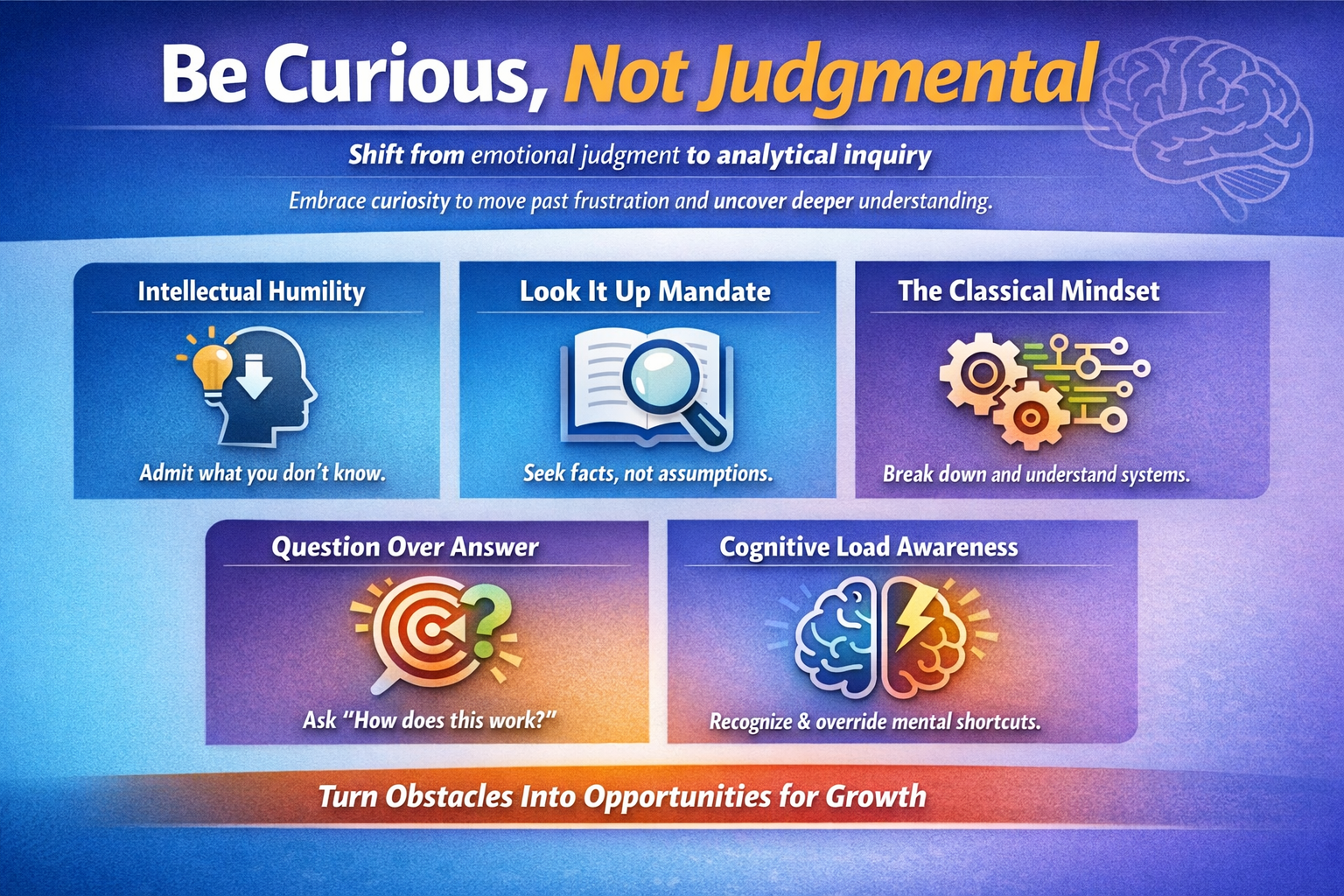
Be Curious, Not Judgmental
"Be Curious, Not Judgmental" is a fundamental mental model that governs how a builder interacts with technology, obstacles, and their own knowledge gaps. At its core, it is a shift from an emotional or evaluative reaction to a functional, investigative one. When a system fails, a "judgmental" posture looks for someone or something to blame—the tool is "broken," the platform is "garbage," or the builder is "not cut out for this." In contrast, a "curious" posture asks, "How is this actually working?" and "Where exactly is the data stopping?"
Explore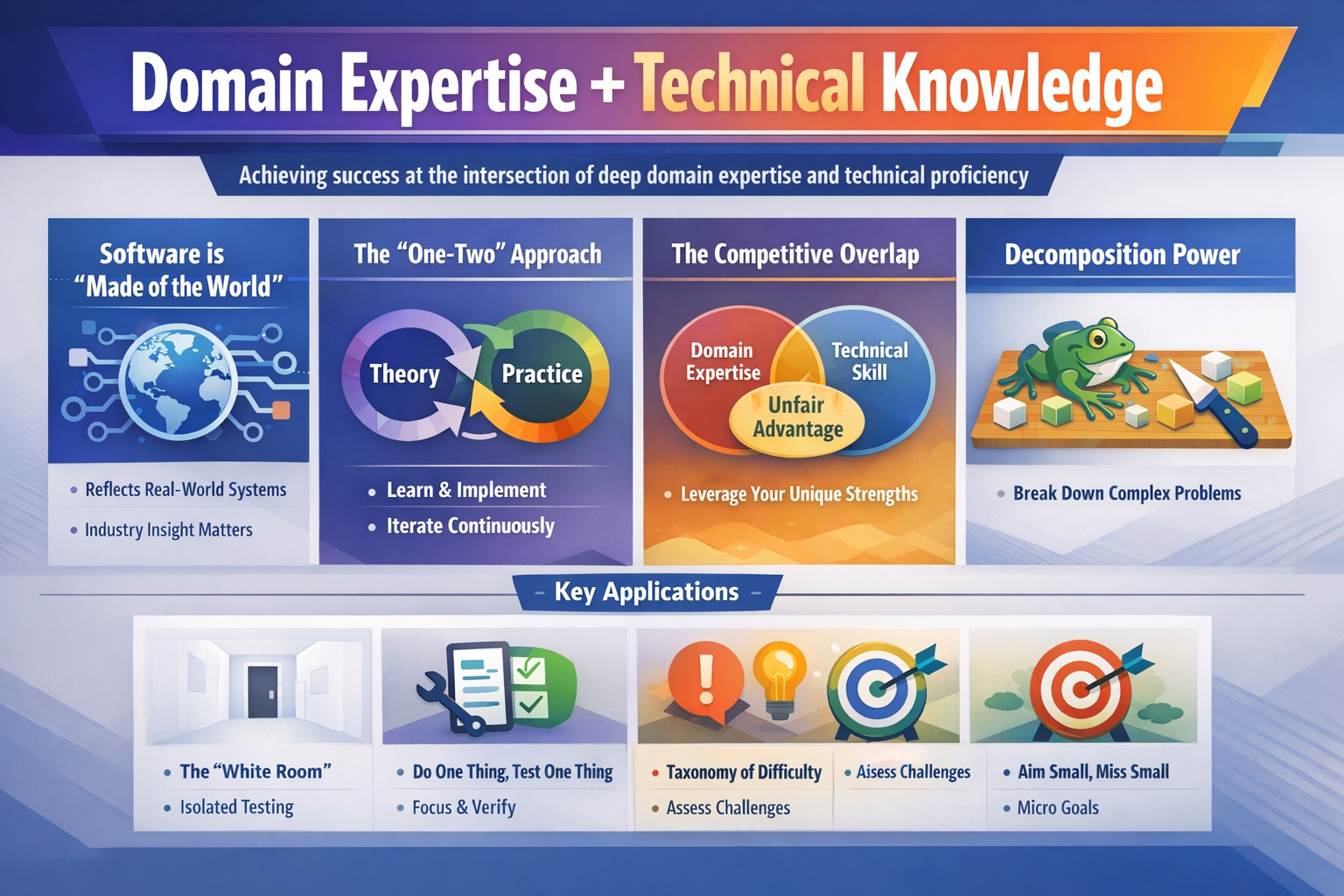
Domain Expertise + Technical Knowledge
The mental model of Domain Expertise + Technical Knowledge is the recognition that high-leverage software development is no longer just about writing code; it is about the synergistic fusion of "the how" (technical skills) and "the what" (the specific real-world field the software serves). In the State Change philosophy, we don’t view software as an isolated digital artifact. Instead, we see it as a functional mirror of a specific industry, process, or human activity.
Explore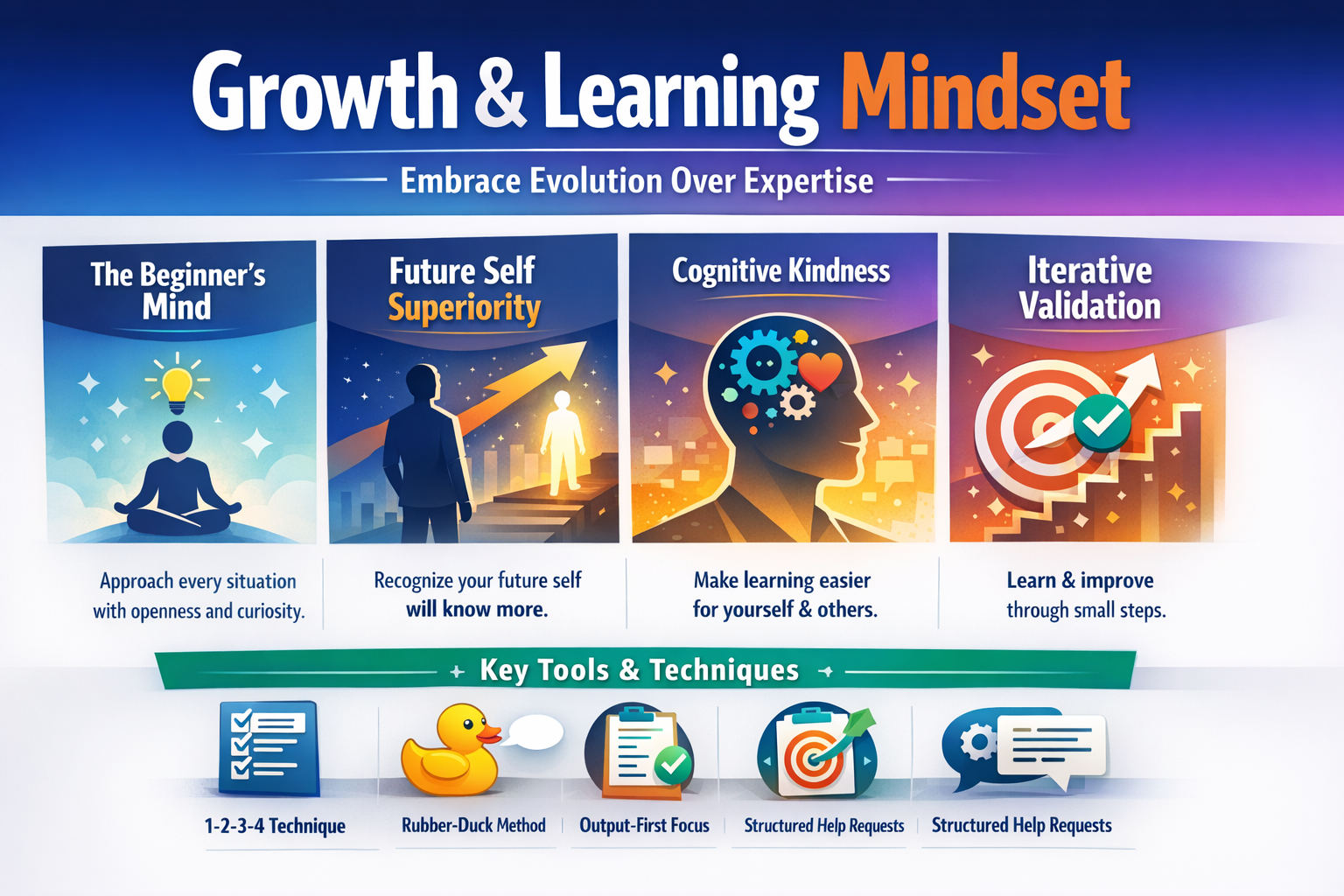
Growth & Learning Mindset
The Growth & Learning Mindset is the foundational operating system for anyone navigating the rapidly shifting landscape of technology and business. It isn't a "positive attitude" or a motivational slogan; it is a fundamental approach to reality that prioritizes the evolution of one’s own capabilities over the preservation of one’s current image as an expert. At its core, this mental model is built on the recognition that your current skills and understanding are merely a snapshot in time—a "Version 1.0" that is expected and required to receive continuous updates.
Explore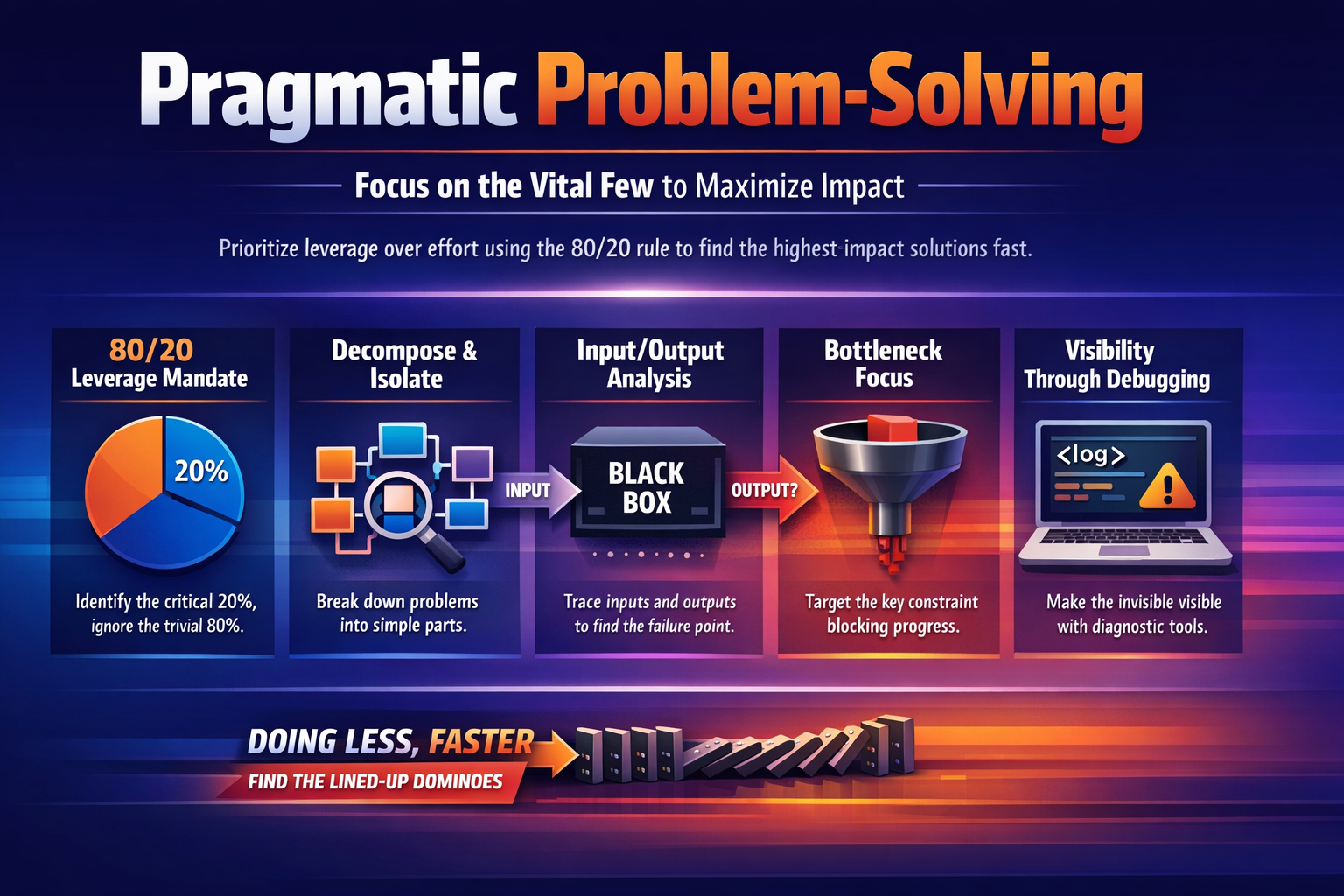
Pragmatic Problem-Solving
Pragmatic Problem-Solving is the foundational mindset for anyone working in technical environments, particularly where complex systems like low-code, no-code, or traditional software stacks are involved. It is a methodical, non-mystical approach to resolving issues by deconstructing them into their most basic logical components. Instead of treating a system as a monolithic "black box" that either works or doesn't, this mental model treats every problem as a series of observable events and data transformations.
Explore